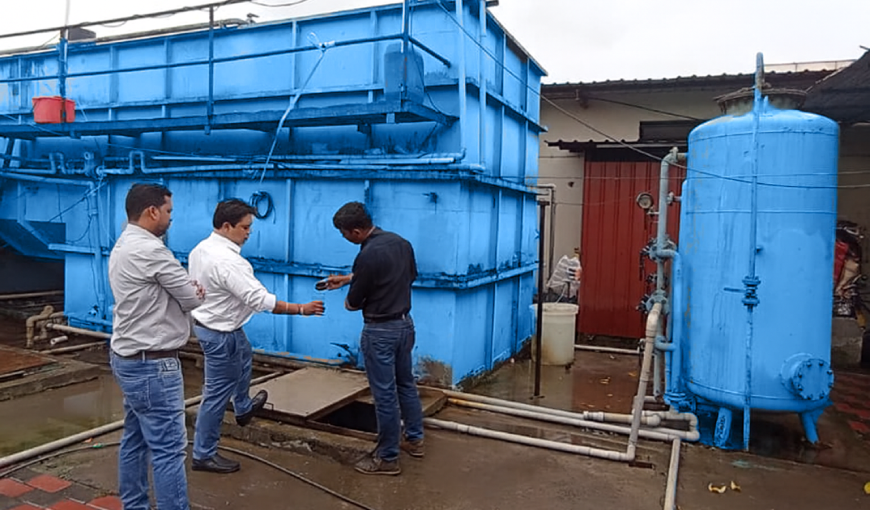
Containerized Sewage Treatment Plants are ideal for decentralized
sewage treatment applications, especially where easy
transportation and quick installation is required. They are
designed to treat sewage generated from small communities,
institutions, hotels, construction sites, remote areas etc.
Depending on its size, a single containerized plant can manage
several treatment phases. This could involve settling to get free
of particles, a biological process to break down organic material,
primary treatment to get clear of heavy solids, and even final
cleaning steps for better water. For the last cleaning stage, a
different container could be required for higher wastewater
volumes. Towns and temporary locations may reduce their dependency
on freshwater resources by using containerized STPs to manage
their wastewater and encourage water reuse for agriculture.
Customized Sewage Treatment Technologies
PTC Watertech LLP provides innovative and efficient sewage treatment solutions using advanced, sustainable technologies to meet the varied needs of residential, commercial, and industrial sectors.
Below are Nine key STP technologies we specialize in:
- Moving Bed Biofilm Reactor (MBBR)
The MBBR process is an advanced biological treatment technology that uses specially designed plastic media carriers within the aeration tank. These carriers provide a large surface area for biofilm growth, allowing efficient degradation of organic pollutants.
- Membrane Bioreactor (MBR)
The MBR process combines conventional biological treatment with advanced membrane filtration. The membranes act as a physical barrier, producing high-quality treated water that can be reused for gardening, flushing, or industrial applications.
- Sequential Batch Reactor (SBR)
The SBR is a time-sequenced batch treatment process. Wastewater is treated in batches through various stages—fill, aeration, settling, and discharge—in a single reactor tank.
- Constructed Wetland Technology
Constructed Wetlands mimic natural wetlands to treat sewage using plants, gravel, and microorganisms. Wastewater flows through a bed of specially selected vegetation that naturally removes contaminants.
- MABR – Membrane Aerated Biofilm Reactor
MABR is an advanced biological wastewater treatment technology in which microorganisms grow as a biofilm on gas-permeable membranes. Oxygen is supplied through the membranes, enabling microorganisms to break down organic pollutants and, in suitably designed systems, facilitate nitrogen removal. Its efficient oxygen transfer and compact configuration can reduce aeration energy consumption and treatment footprint, depending on the system design and operating conditions.
Typical applications: Residential complexes, commercial buildings, space-constrained projects and wastewater treatment plant upgrades.
- ASP – Activated Sludge Process
The Activated Sludge Process is a conventional biological treatment technology in which sewage is mixed with air and active microorganisms in an aeration tank. These microorganisms consume biodegradable organic matter, reducing the pollution load. The biological solids are subsequently separated in a secondary clarifier, with a portion of the settled sludge returned to maintain the biological process.
Typical applications: Residential townships, commercial developments, institutions and municipal sewage treatment plants.
- Extended Aeration Process
Extended Aeration is a modification of the Activated Sludge Process that operates with a longer aeration period, lower organic loading and a relatively low food-to-microorganism ratio. This promotes biological oxidation and endogenous respiration, generally resulting in more stabilized excess sludge and lower sludge production than conventional ASP under comparable conditions. Proper aeration, clarification and sludge management remain essential.
Typical applications: Residential societies, apartments, hotels, hospitals and small-to-medium wastewater treatment facilities.
- Bio-digester STP
A Bio-digester STP uses specially selected microbial cultures and controlled biological conditions to decompose biodegradable organic matter in sewage. Depending on the design, the process may operate under anaerobic conditions or as part of a multi-stage treatment system. Additional treatment and disinfection may be required to achieve the applicable discharge or reuse standards.
- ANBT – Anaerobic Bio-Digester Technology
Anaerobic Bio-Digester Technology treats wastewater using microorganisms that break down biodegradable organic matter in the absence of dissolved oxygen. Depending on the reactor configuration and wastewater characteristics, the process can reduce organic loading and may generate biogas. Anaerobic treatment alone does not necessarily achieve the quality required for safe discharge or reuse; appropriate downstream aerobic, filtration or disinfection stages may be necessary.